The Challenge
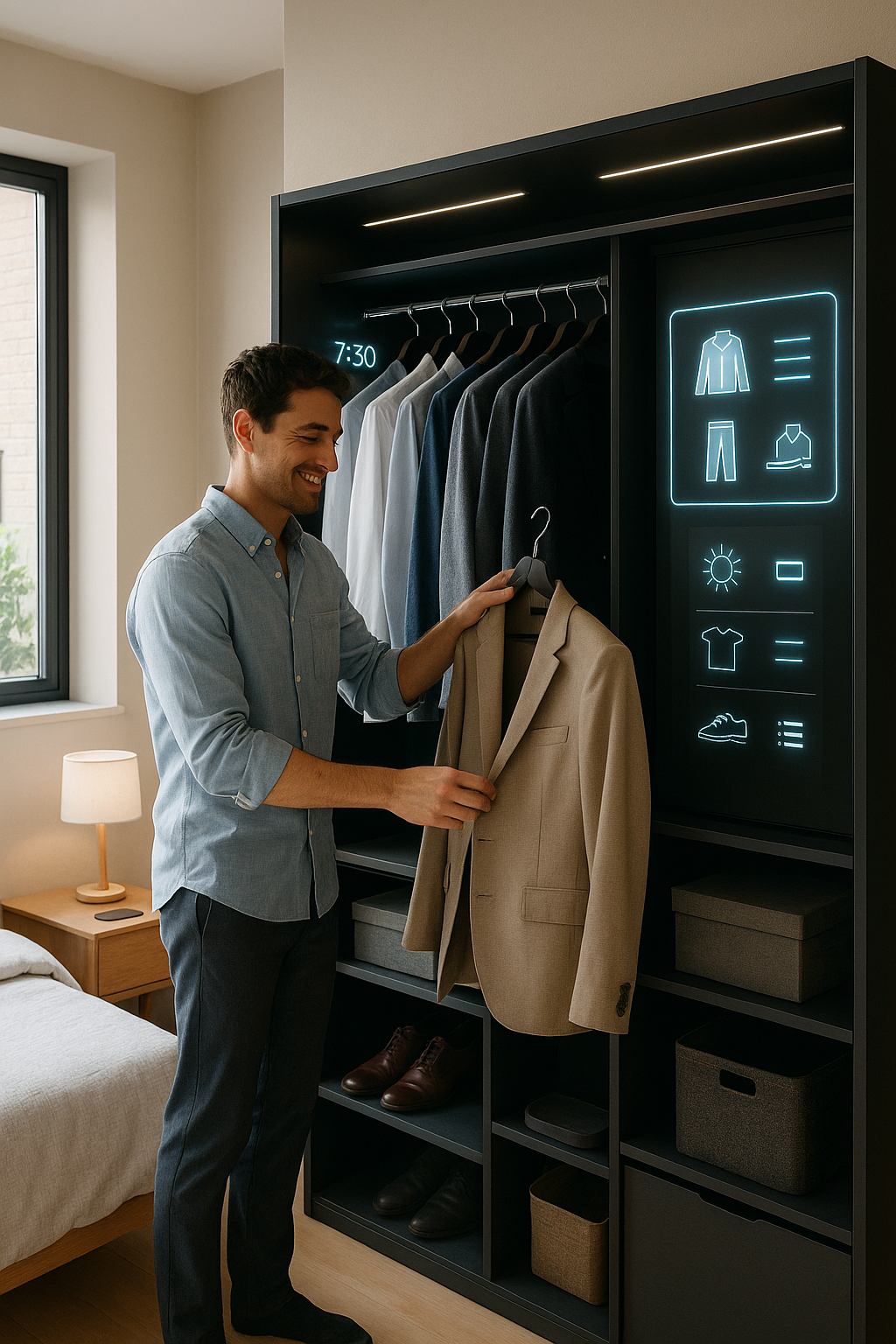
Design a smart closet. Assume that you are an existing closet manufacturer and can use all technologies available in the market.
Closets are often cluttered and disorganized, making it hard to find the right clothes quickly, causing delays, stress, and decision fatigue. People waste time hunting for missing items or realize too late something's dirty or wrong for the weather/occasion, which hurts confidence and can be embarrassing. The UCLA 'Life at Home' study found that physical clutter increases cortisol levels, elevating stress. Similarly, researchers from UConn discovered that reducing clutter improves mood, lowers anxiety, and boosts confidence. A smart, organized closet could relieve this emotional burden while improving daily routines.
As an established closet manufacturer with in-house design and production, we're positioned to fix this end-to-end. We can build a smart closet that organizes and tracks inventory, suggests weather/occasion-appropriate outfits, and surfaces what's clean and available thus saving time, reducing stress, and helping people start the day confident and in control.
Segments
Brainstorm segments.
| Segment | Progress they are trying to make |
|---|---|
| Time-efficiency Seekers | Functional: Trying to get ready, look sharp with zero mental effort, and get out the door to the office. Emotional: They want to dress professionally, feel confident for back-to-back meetings, avoid last-minute stress or frustration, and start the day on a positive note. Social: They want to impress others or themselves for being extremely organized and productive. |
| Trend-setter Dressers | Functional: Trying to get ready quickly, look trendy, and avoid repeating outfits by restyling pieces in a way that still feels fresh. Emotional: They find joy in styling themselves and feel confident in their choices. Social: They want to make the best impression every time and keep their look memorable without being predictable. |
| Wardrobe Organizers | Functional: Trying to be independent in choosing their own clothes while keeping mornings calm and organized. Emotional: They want to avoid chaos, delays, and constant supervision by parents to put clothes back in the right place. Social: They want to be seen as responsible and independent kids by parents and peers. |
| Empowered Dressers | Functional: Trying to access, find, and put back clothes independently and safely without struggling or needing constant help. Emotional: They want to feel happy, confident, and self-reliant every time they get dressed. Social: They want to be seen as self-sufficient, independent, self-reliable individuals. |
| Guidance-seeking Dressers | Functional: Trying to avoid wasting time staring at their closet, unsure of what to wear or how to style it by getting suggestions. Emotional: They want guidance and recommendations so they are ready to step out with confidence. Something like a personal stylist. Social: They want to be seen as decisive, confident and comfortable in their outfits. |
| Wardrobe Maximizers | Functional: Want to quickly find the right clothes for the occasion without digging through a crowded or cluttered closet. Emotional: Aim to reduce stress, save time, and feel good about making use of all the clothes they own. Social: Want to be seen as organized and intentional in how they manage their wardrobe. |
| Season-Ready Organizers | Functional: Keep their main closet stocked with season-appropriate clothing, ready to wear without extra sorting or searching. Emotional: They want to save time and effort in choosing the right clothes. Social: Want to be seen as organized planners who are always ready and in control. |
If more than one, pick one
Clearly explain your rationale for picking the persona
Prioritization criteria : Market Size and Willingness to pay.
| Segment | Total Addressable Market | TAM Fit (1–5) | Willingness to Pay (1–5) | Underserved Need (1–5) | Weighted Score |
|---|---|---|---|---|---|
| Time-efficiency Seekers | 4 | 4 | 4 | 12 | |
| Trend-setter Dressers | 2 | 1 | 1 | 4 | |
| Wardrobe Organizers | 3 | 3 | 2 | 9 | |
| Empowered Dressers | 3 | 3 | 4 | 10 | |
| Guidance-seeking Dressers | 2 | 1 | 1 | 4 | |
| Wardrobe Maximizers | 3 | 2 | 2 | 7 | |
| Season-Ready Organizers | 2 | 2 | 2 | 6 |
I will chose #1. Based on our weighted scoring across the Total Addressable Market (TAM), willingness to pay, and underserved need, Time-efficiency Seekers scored the highest at 12. This segment represents the largest market opportunity, strong spending power, and a clear pain point we can solve with a smart closet.
People waste real time and energy just choosing what to wear. In one study, adults spend 17 minutes every morning picking outfits totaling four days per year, or six months over a lifetime. Over 74% of Gen Z workers feel stressed by daily outfit decisions, and in morning routines, people lose an average of 20 minutes selecting clothes. These people genuinely need tools to help them be more productive and efficient so they can start the day confident and without stress, frustration, or mental load. They are also more likely to invest in appliances that simplify their busy lives.
Our main goal is to capture the biggest market first for profitability. We'll start with Time-efficiency Seekers, while building features that also appeal to Empowered Dressers for easy expansion later. No existing solution, whether from IKEA, local furniture stores, or smart-home brands, addresses this need for our segment in such a complete, time-saving, and confidence-boosting way.
Other segments:
- Trend-setter Dressers – A small segment that's unlikely to rely on suggestions from a smart closet since they're already experts at selecting outfits and perfecting their style.
- Wardrobe Organizers – A good segment, but their main motivation is to build organizational habits, which can be achieved with simple, existing solutions rather than investing in a smart closet.
- Empowered Dressers – A unique and underserved segment that could be a strong differentiator, but the market size is small. In addition, willingness or ability to pay for such a solution may be limited for many.
- Guidance-seeking Dressers – A potentially good segment, but styling apps already exist to help people coordinate outfits from their current wardrobe.
- Wardrobe Maximizers – A niche segment where few may be willing to acknowledge this issue and pay for a solution. The challenge here is more about organization and periodic decluttering (spring/summer cleaning) than whether the closet is smart.
- Season-Ready Organizers – People who rotate clothing by season, storing out-of-season items and bringing forward current ones. This is largely a physical and motivational task, so a smart closet may not provide much real value for them.
Trade-off : By choosing Time-efficiency Seekers, we're going after the biggest market first for quick profitability. But it means we may miss the chance, at least for now, to lead with a breakthrough product for Empowered Dressers, which could have made a huge impact, built a strong brand story, and positioned us as champions for inclusive design. As an accomplished manufacturer with resources, we have the capability to research and create a breakthrough solution for this underserved group, something that could become a sensation in the industry and double as powerful marketing for a good cause.
Obstacles
Brainstorm Obstacles
I hate it...
- When I spend so much time folding and organizing my closet every other weekend, only for it to look the same cluttered way again after two days. It leaves me feeling so unproductive, and no sense of accomplishment doing this task.
- When I can't find the clothes I want, whether it's socks, shirts, or accessories (like cufflinks, earrings, and scarves ) because they're buried in piles or stored in some drawer, in the wrong spot, or still sitting in the dryer. It makes me doubt my organizational skills and start the day on a very disappointing note.
- When I forget about clothes I own because they're buried or out of sight, and I end up wearing the same few outfits over and over.
- Getting dressed and realizing something doesn't work; maybe the tie/scarf doesn't match the suit, the pullover clashes, or I can't find the right piece to complete my look ,leaving me frustrated and scrambling and an even bigger mess. I wish I had a stylist to guide me.
- When my closet is full of clothes from the wrong season or I wear something totally unsuitable for the weather, like a warm shirt on a hot day, making me uncomfortable and annoyed. I wish I had a reminder like 'Spring cleaning Time' to swap or shuffle clothes by season.
- When clothes smell musty from sitting too long in piles or come out of the closet badly creased because there's no space to hang them, adding more tasks like ironing before I can leave, leading to anxiety of running late.
- When I pull one item from a pile and the whole stack falls apart, creating a bigger mess that I now have to clean up.
- When I can't decide what to wear for an occasion, wasting time and risking being late, all while feeling stressed and unsure.
Pick one or more obstacles to focus on.
Clearly explain your rationale for picking the obstacle
Prioritization criteria : Intensity of need & ability to solve
I will choose the obstacle #2. I hate when I can't find the clothes I want, whether it's socks, shirts, or accessories (like cufflinks, earrings, and scarves ) because they're buried in piles or stored in some drawer, in the wrong spot, or still sitting in the dryer. It makes me doubt my organizational skills and start the day on a very disappointing note.
This obstacle impacts a huge number of people because it's part of their daily routine. Every single morning, they face the stress of keeping closets organized and finding what they need on their own. A calm, peaceful morning sets the tone for the whole day, and solving this problem saves valuable time while boosting happiness, confidence, and a sense of control. It helps people feel efficient and productive both at home and at work, like they've discovered a little secret to keeping life simple, organized, and stress-free.
For the closet manufacturer, this is an opportunity to reimagine how a closet can truly help people. With full control over design, production, and access to the latest smart-home technologies, they can create a closet that goes beyond storage and actively help people stay organized, find what they need instantly, and start their day stress-free.
Solutions
Brainstorm Up to three solutions Focus on explaining how the user uses the solution rather than the technology
Smart Closet Voice Buddy
A built-in voice agent that greets you in the morning and helps you decide what to wear, completely hands-free while you're brushing your teeth, washing your hands, or combing your hair. It can check your calendar and suggest outfits for upcoming meetings, dinners, or trips, factoring in the weather and your clothing inventory.
Organized Sections with Inventory Tracking
A closet designed with dedicated, labeled sections for each category, such as scarves, hats, ties, socks, undergarments, shirts, trousers, shoes, etc. can make it easy to grab and return items without creating a mess. Enough hanging space prevents creases, with a spot for a clothes freshener. Integrated sensors track your inventory and send reminders when essentials are running low, like "Only two pairs of socks left" or "No shirts available." It also prompts seasonal swaps, e.g., "Time to bring out summer clothes," keeping the closet fresh, organized, and season-ready.
Closet Planner App
An integrated mobile app that connects to your smart closet, letting you browse your actual clothing inventory anytime, be it on the train, in bed, or while traveling. You can plan outfits in advance, tag items you want to wear soon, and even get reminders about clothes you haven't worn in a while. This reduces morning decision fatigue and ensures you always have a ready plan before opening the closet.
Pick one solution
Clearly explain your rationale for picking the solution
Prioritization criteria : Feasible & Impactful.
I will pick '#2 Organized Sections with Inventory Tracking' because it directly addresses most of the daily frustrations people face with closets while making items easy to find, preventing clutter, and eliminating last-minute stress. With reminders for low inventory and seasonal swaps, users can manage their wardrobe effortlessly, saving time and staying organized. This gives them a sense of control, accomplishment, and confidence every day.
Disorganized closets don't just waste time, they cause genuine stress and mental strain. Women report that organized closets make mornings less stressful, and better organization can save up to 30 minutes a day. Research shows we spend over 3,600 hours in our lifetime searching for misplaced items. Clutter also raises stress hormone levels and makes it harder to focus. That's why our smart closet with labeled sections and inventory tracking not only boosts efficiency but also supports mental well-being and reduces daily friction.
As an established closet manufacturer, we already have the design, production, and customization capabilities to create these dedicated sections and integrate smart tracking technology. This makes the solution both highly feasible and impactful, while differentiating us in the market.
Tradeoff: By focusing on the core physical organization system first, we ensure immediate impact and usability for all customers. However, this means delaying advanced tech-driven features (#1 and #3) that could deepen engagement and deliver a more personalized closet experience.
Success Signals & Metrics
To measure the impact of the Organized Sections with Inventory Tracking, we would track:
North Star Metric: % reduction in average time spent searching for clothing or accessories (target: 25%+ within the first 3 months).
Secondary Metrics:
- % of users reporting they leave for work on time more often (target: 30%+ within the first 3 months).
- % of users who keep up with reminders and maintain an organized inventory (target: 40%+ within the first 3 months).
- NPS score (target: >60% after 3 months of use).
Go-to-Market & Scaling Plan
Launch (first 6 months):
- Start in large U.S. metro areas with high concentrations of working professionals.
- Sell online directly and through professional groups.
- Pilot with select local furniture stores (Costco) to test in-person sales and gather live feedback.
- Set up booths at major tech and lifestyle conferences to demo the smart closet in action and offer exclusive early-buyer discounts to drive urgency and create buzz. Capture leads on-site for follow-up email campaigns and referral offers.
Grow (6–18 months):
- Sell nationwide via retailers like Costco, Target, IKEA, HomeDepot and Amazon.
- Make a smaller, cheaper version for small homes/apartments.
- Add personal styling app & assistant.
Scale (18+ months):
- Partner with real estate developers to include smart closets in new luxury apartments.
- Expand to similar markets like Canada, UK, and Australia.
- Launch Empowered Dresser Edition with accessibility-first design for people with disabilities.
- Explore subscription-based upgrades for styling recommendations, seasonal wardrobe rotations, and inventory analytics.