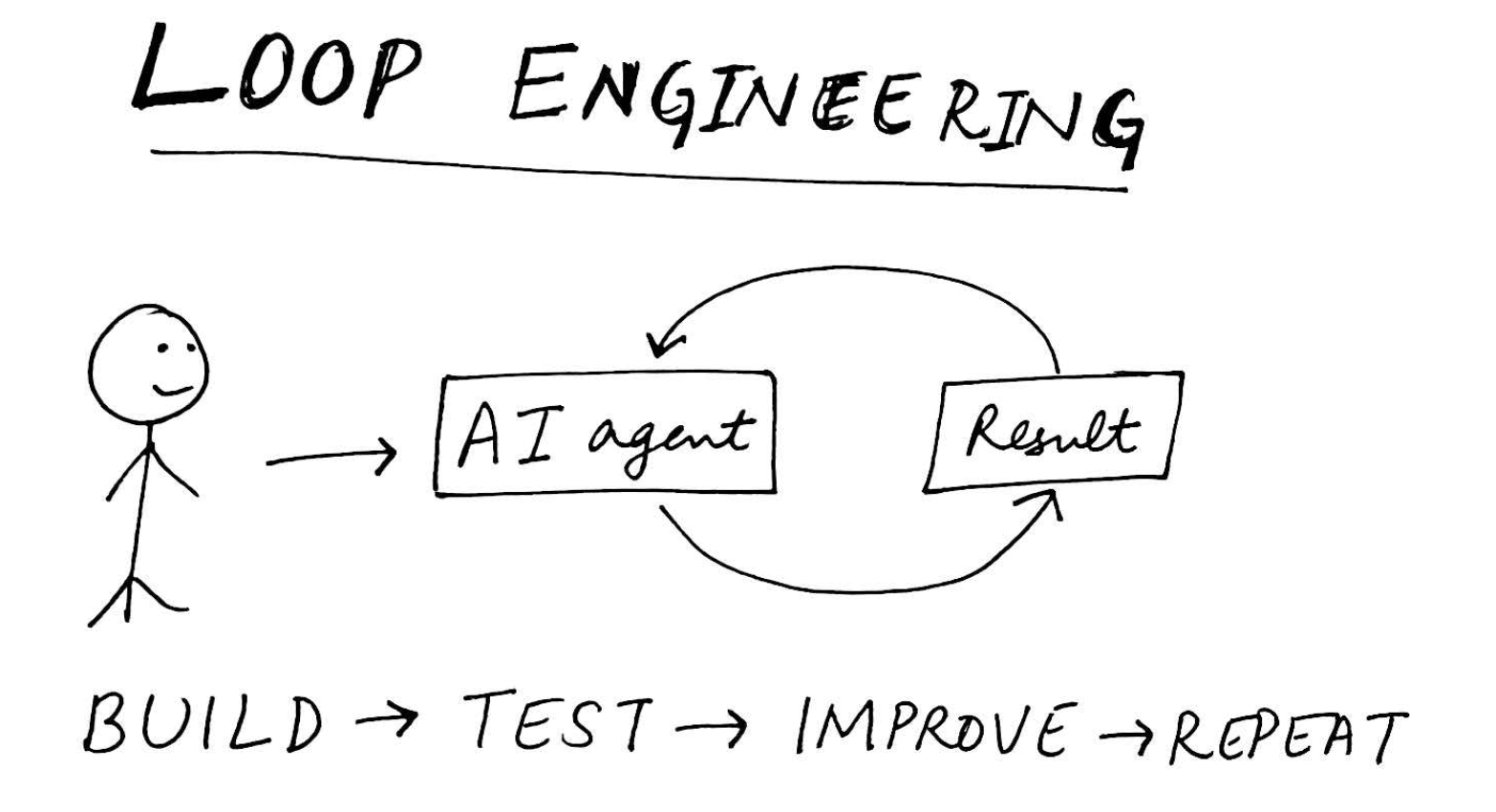
Loop engineering simply means giving AI agents repeatable work cycles: build, test, check, improve, repeat.
The idea of loops is old. Iterative development, Build-Measure-Learn, and control loops have existed for years.
What changed is that AI agents can now run parts of the loop by themselves. In AI coding tools, we can use something like /goal, attach a spec.md or prd.md, and ask the agent to keep working until the task is done.
It's powerful, but risky.
- The human starts the loop once.
- The agent keeps making decisions inside it.
When Loops Work Well
This works well when the agent knows what to fix and the system can check if it worked. For example: code review, test repair, small cleanup tasks.
In these cases:
- The agent has a clear target.
- The system can check the result.
- The loop has a reason to stop.
Where It Breaks Down
Building a full product is different. A PRD may say:
"Create a simple signup flow."
But the agent still has to guess the details:
- How many fields?
- Phone number or email only?
- Where should errors show?
- What happens after signup?
If those guesses are wrong, the agent can keep building the wrong thing faster. That is when loops become expensive. The AI keeps working, the bill keeps growing, but the product may not be getting better.
The Rule
Fast loops are useful for clear, checkable work: code review, test repair, refactoring, small cleanup.
Slow the loop down when the product direction is unclear. The agent can keep building, but the human still has to decide what is worth building.