The Challenge
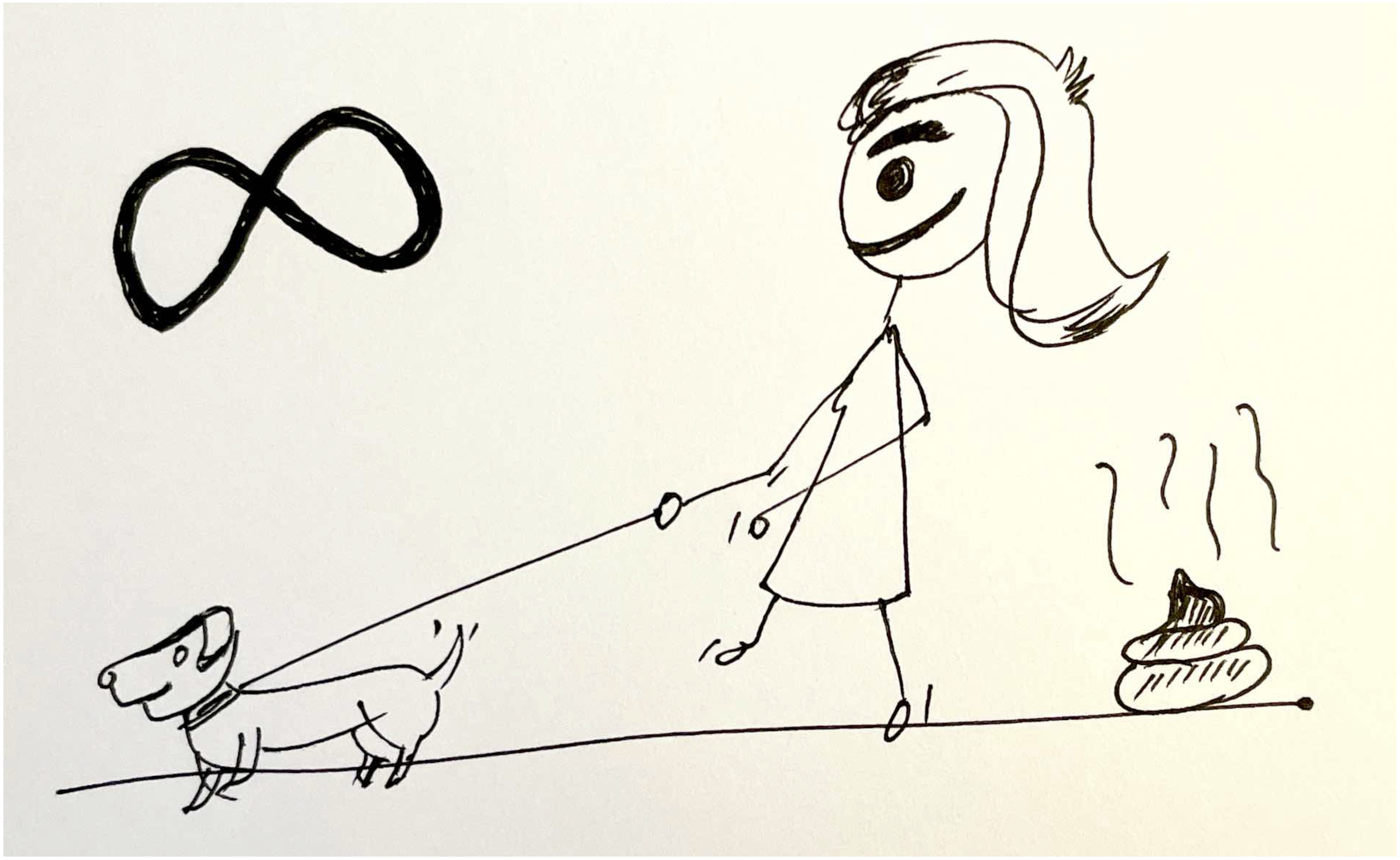
You are a PM at Meta. Design a product to solve the dog-poop problem.
Before I start, two clarifying questions:
- We are not targeting dog-poop problems that happen inside people's homes or backyards. The focus is on public spaces, parks, beaches, and sidewalks.
- The U.S. market will be the initial target, and we can expand to other regions later.
Problem Framing & Mission Alignment
What causes the "dog poop problem"? Why does it exist?
Dog poop itself isn't avoidable — dogs will poop. The real issue is dog owners who don't clean up after their pets.
We're seeing a rise in pet ownership, but not everyone understands the responsibilities that come with it. Cleaning after pets isn't a fun chore, yet it's essential. When people fail to do it, it ruins the experience for everyone else using public spaces.
If I'm walking on a sidewalk and accidentally step on dog poop, it ruins my mood, dirties my shoes, and makes me frustrated. Worse, I start forming opinions about all dog owners — that they're irresponsible and lack civic sense.
So, the real problem isn't hygiene alone — it's civic responsibility and social behavior. We can't train dogs not to poop, but we can encourage owners to act responsibly.
To address this, we need to raise awareness and build civic sense through community — by connecting people, creating accountability, and fostering shared responsibility. When people come together around a cause, it succeeds.
This makes perfect sense for Meta to build such a product. It aligns strongly with Meta's mission of building the future of human connection and the technology that makes it possible.
GOAL: Connect responsible pet owners, create awareness, and build better communities — clean, safe, and friendly. Increase engagement by connecting dog owners within communities, improve retention through ongoing interactions and local meetups, and enable monetization through ads and partnerships with pet stores, trainers, and local businesses.
Competitors
A platform that comes to mind is Meetup — people join community groups for activities like dog walks or beach hangouts.
However, Meta has two major advantages:
- Decades of user data — Meta understands user behavior deeply.
- Trust and verification — Profiles are real and verified, giving users confidence and safety.
Stakeholders
Dogs who poop — They're not at fault.
Dog owners — Responsible for cleaning up.
Local park authorities — Maintain pet-friendly infrastructure.
Municipal corporations — Ensure cleanliness.
General public — Non-pet owners who use these shared spaces.
Chosen Stakeholder: Dog Owners
They represent the largest total addressable market, the product will have the biggest impact on them, the frequency of use is highest, and the intensity of pain they face (or cause) is the greatest.
Segmentation (Functional / Emotional / Social Needs)
| Segment | Functional | Emotional | Social |
|---|---|---|---|
| New Pet Owners | Learn best practices; find guidance; manage routines | Feel confident, supported, and not judged | Belong to a "responsible pet parent" community |
| Responsible & Motivated Owners | Coordinate cleanups; report issues easily | Feel proud, validated, and respected | Build local reputation; inspire others |
| Owners Uncomfortable with Cleaning | Need easier tools or services | Feel less embarrassed or grossed out | Avoid public shame or criticism |
| Irresponsible Owners | Outsource cleanup; avoid effort | Feel justified ("I pay taxes") | Maintain status quo |
Prioritization Criteria & Chosen Segment
| Segment | Priority | Rationale |
|---|---|---|
| New Pet Owners | Medium | Learning phase, but not yet influential |
| Responsible & Motivated Owners | High | Already motivated and can drive collective behavior |
| Owners Uncomfortable with Cleaning | Low | Pain is high but motivation low |
| Irresponsible Owners | Very Low | Low intent, hard to influence |
Chosen Segment: Responsible & Motivated Owners
Why? They balance impact (can drive behavioral change), mission alignment (community building), and feasibility (easy to engage through Meta's ecosystem).
Obstacles ("I hate it when…")
- "I hate it when I see poop lying around parks or sidewalks but have no idea who's responsible."
- "I hate it when people assume I am the irresponsible one because I'm a dog owner."
- "I hate it when bins are overflowing or smelly and I can't notify anyone about it."
Chosen Obstacle
"I hate it when people judge me as irresponsible, even though I clean up after my dog. I want visibility and accountability so I can show I'm doing the right thing."
This pain is both emotional (judgment and frustration) and social (desire for validation and belonging).
Solutions
Brainstorm Up to three solutions
Focus on explaining how the user uses the solution rather than the technology.
1. Meta Connect Micro-Community Platform (Chosen)
A local "dog owners" group where verified members connect, chat, and coordinate walks.
How it works:
- Find accountability partners ("I'm walking at 5 pm, anyone joining?")
- Notify others of overflowing bins or poop hotspots
- Report infrastructure issues and bond through shared action
2. Badge & Reward Program
Every time a member reports a cleanup issue or alerts authorities, they earn recognition badges.
How it works:
- Earn badges like "Responsible Pet Owner of the Week"
- Promotes visibility, pride, and social proof
- Creates positive reinforcement for civic behavior
3. Community Cleanup Events
Members organize monthly drives (e.g., "Beach Clean Saturday").
How it works:
- Participants earn points redeemable at local pet stores through Meta's partnerships
- Builds real-world connections and community pride
- Creates visible, tangible impact
Pick one solution
Clearly explain your rationale for picking the solution.
Prioritization criteria: Impact on the segment, Mission Alignment, Feasibility
I will choose Meta Connect Micro-Community Platform because it directly aligns with Meta's mission, leverages existing products, and creates a system of visibility and accountability.
Impact on the segment: When responsible behavior becomes visible, it inspires imitation and social pressure, turning civic sense into a rewarding, community-driven experience.
Feasibility: Meta already has Facebook Groups, Messenger, WhatsApp, and Instagram — all the infrastructure needed to build local micro-communities.
Differentiation: Unlike Meetup, Meta offers verified profiles, deep user data, and existing social graphs that make community formation seamless.
Why did you kill your darlings? / Why not others?
- Badge & Reward Program: Great for engagement but doesn't create the foundational community needed first. Can be added as a feature later.
- Community Cleanup Events: Valuable but event-driven and less frequent. Better as a layer on top of the micro-community platform.
Success Signals & Metrics
North Star Metric: % of members who actively participate in their local dog-owner community weekly.
Secondary Metrics:
- Daily Active Users (DAUs) — Number of users posting, commenting, or liking within the community
- Connections Formed — % of users who connect or walk together
- Reports Sent — % of notifications about cleanup or infrastructure issues shared with local authorities
- Net Promoter Score (NPS) — How safe, proud, and connected users feel within their local community
Closing Note
This isn't just about cleaning poop. It's about building civic sense through community, turning responsibility into pride, and making public spaces cleaner and friendlier, together.
When people connect behind a cause, awareness becomes contagious. That's what Meta does best — it connects people to make real-world impact.