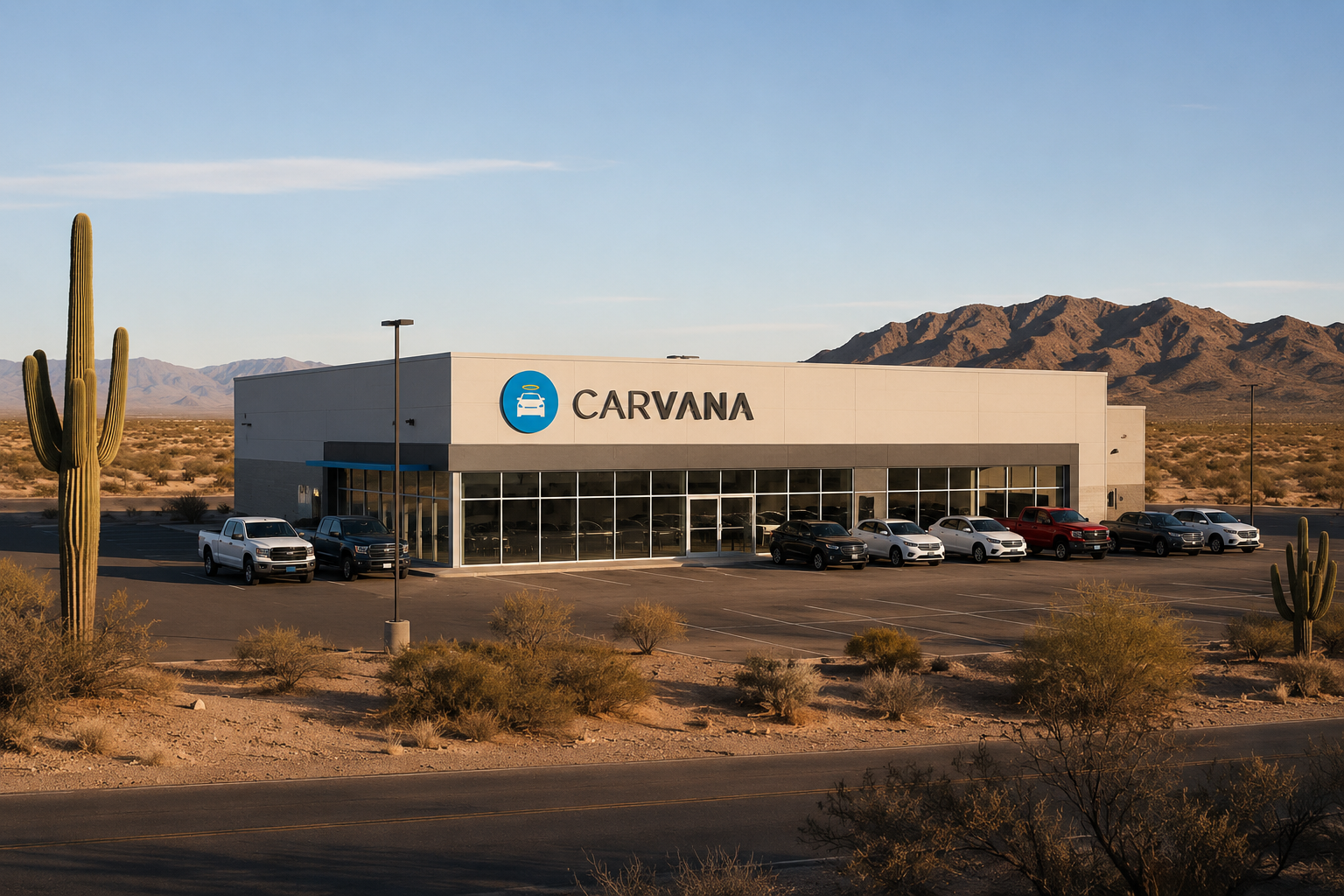
There is not much southeast of Phoenix. Miles of desert, a few cactuses, and a small town called Casa Grande. It is the last place you would expect to find a product strategy lesson. But that is exactly where Carvana took a sleepy Chrysler, Dodge, Jeep and Ram dealership and turned it into something worth a closer look.
Same building. Same team. Completely different outcome.
After Carvana bought the Casa Grande dealership, sales reportedly grew from 30 to 50 cars a month to about 350. How did that happen? The increase did not come from packing the showroom with more salespeople. A lot of the work moved online. A buyer could shop from home, see a fixed price, arrange financing, complete the paperwork, and get the vehicle delivered to their home or sent to a nearby pickup location. That is how someone in Kansas City could buy a Wrangler from an Arizona dealership without ever flying to Arizona or walking into the store. Carvana kept the dealership as the legal sales, inventory, and fulfillment layer, then put its digital buying journey on top.
Most people who have bought a new car know the pain Carvana was solving. You browse. You test drive. You sit down to talk price. The salesperson goes to "check with the manager." You wait. The price changes. Hours disappear. For decades, this was the default path. The dealership was the gate every new-car buyer had to pass through.
Carvana saw the same dealership differently. The biggest opportunity was the journey around the sale. So they redesigned it. Search, pricing, financing, paperwork, delivery, and even the return policy became part of one connected buying flow. That seven-day return window may be the quiet genius of the model. It gives people enough confidence to spend serious money on a car they have not seen in person.
Carvana engineered trust into the buying process. No commission-based salespeople. Clearer pricing. Less negotiation. A return policy. Delivery across distance. Once trust moved online, geography became less important. A small desert dealership could start acting like a national distribution node.
This may be bigger than one dealership. Carvana could become an option for new automakers that want to sell cars in the U.S. without building a traditional dealer network.
That is the PM lesson I keep thinking about. The dealership stayed the same. The journey changed. And that changed the business. Carvana's real move was turning a painful buying journey into a digital workflow people could trust.