The Challenge
Design a bookshelf for kids. Assume you are a product manager at a startup with funding in the US.
With US funding secured, we can focus on designing for the US market first.
Reading is essential for children's growth, and parents and educators want kids to build strong reading habits. However, current bookshelf solutions at home and in schools are poorly designed for kids' needs. Books are often stored in cupboards or heavy, bulky shelves that are hard for children to access. Disorganization makes it difficult for kids to find their favorite book, leading to frustration for the child and interruptions for the parent. For families in smaller spaces, size and mobility of shelves become additional challenges. According to the National Home Organization Industry Survey, 2021, 65% of household clutter is caused by disorganization due to a lack of dedicated storage. In addition, 60% of urban residents avoid purchasing bookshelves altogether because traditional designs are bulky, heavy, and occupy too much space in small apartments. Safety is also a concern. Sharp edges, instability, and heavy furniture require constant supervision or modification to make them child proof.
Building independence and responsibility in kids is important to both parents and educators. A child-friendly bookshelf can result in self-directed reading, reduce reliance on adult supervision, and create a calmer home or classroom environment. Without an accessible, organized solution, books remain underused, and reading habits are harder to sustain.
Market Opportunity
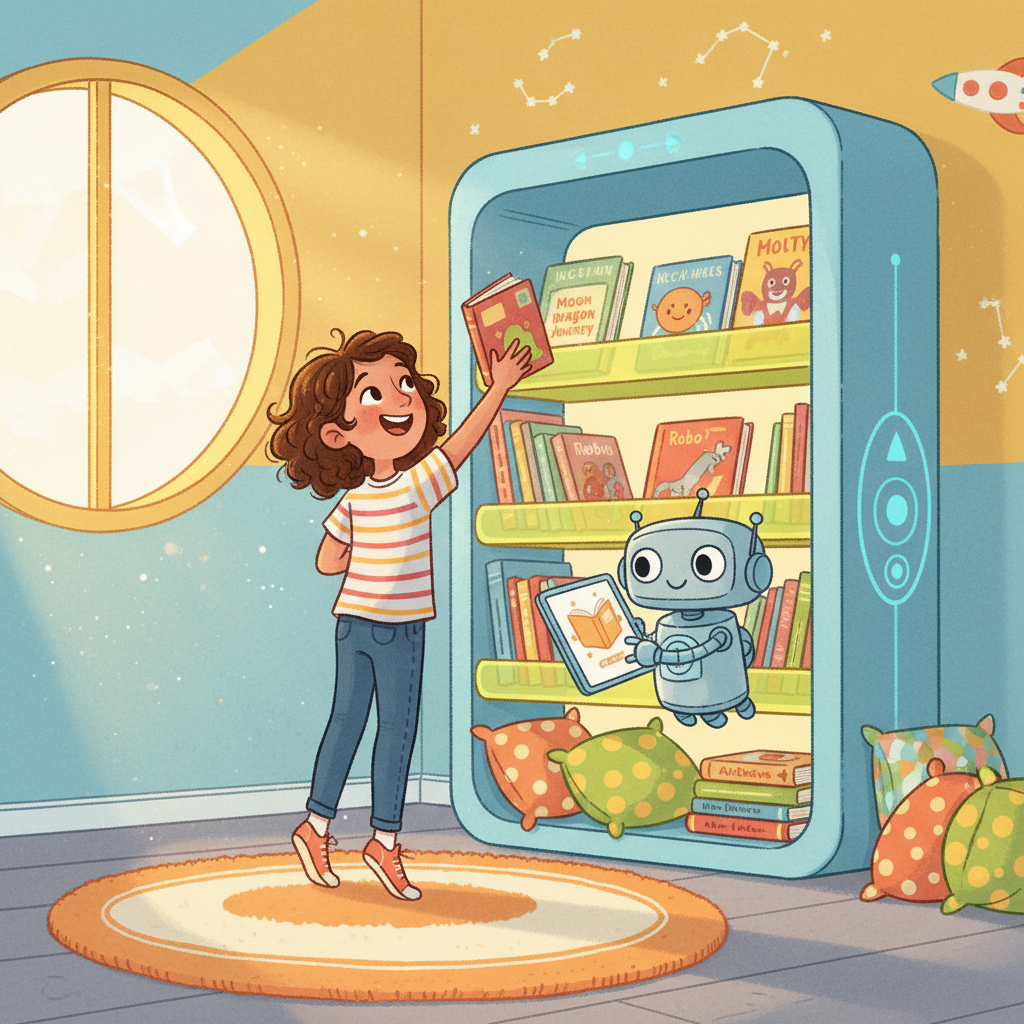
In 2023, the U.S. kids' furniture market was worth about $13.5 billion and is growing fast, around 20% every year until 2030. This means more parents are looking for furniture that is safe, practical, and works for all kids. Focusing on children with accessibility needs gives the startup a unique advantage in this growing market. We can reduce clutter by giving families a dedicated, child-friendly place for books, and can encourage bookshelf adoption by creating lightweight, space-efficient designs that work even in small homes. Features like designated book spaces, digital labels, reading suggestions, and reminders for books not read recently could make the bookshelf a "reading companion" that can help kids stay organized while giving parents and teachers peace of mind. Hence, there is a perfect market opportunity to design a smart, child-friendly bookshelf that is light, safe, space-efficient, and easy for kids to use independently
Stakeholders
- Kids
- Parents/Caregivers
- Teachers/Librarians
- Non-profit Organizations
- Bookshelf Design & Engineering Teams
- Manufacturers
- Safety Compliance Teams
- Retail/Distribution Partners
Segments
| Segment | Progress they are trying to make |
|---|---|
| Clutter Reducers | Functional: Want to keep their home clean and organized by reducing book clutter, while helping their kids build good habits. Emotional: They are trying to reduce daily stress, anxiety and mental load by not having to clean up or nag the child constantly. Social: They want to be seen as parents who raise independent, responsible children, and who take ownership of storing books and returning them to their proper place. |
| Independent Kids | Functional: Want to access and store their books independently, without needing constant help from parents or teachers. Emotional: They need a bookshelf designed with accessibility in mind such as height, reach, labeling, and handling, so they can feel capable, confident, inclusive, and proud when managing their own reading space. Social: They want to be seen by peers, parents, and teachers as independent and able to participate fully, just like any other child. |
| Collection Builders | Functional: Want to expand and organize their book collection so it's easy to access and enjoy. Emotional: They feel proud, accomplished, and feel more confident when they proudly see the display of their book collection. Social: They want to be seen as disciplined, knowledgeable and motivated readers. |
| Fun-First Readers | Functional: They prefer to spend free time on games, play, or activities they find exciting, and often choose reading when it feels easy to start and engaging. Emotional: They want reading to feel enjoyable and rewarding, not like a school assignment. Social: They just want to be seen as all about fun and active, like a kind of kid everyone enjoys being around. |
| Library Guardians | Functional: They want to keep classrooms or libraries clean, organized, and efficient by storing books in the right place and under the correct label so both they and students can quickly find and return them without disrupting lessons or activities. Emotional: They feel accomplished, in control, and proud when their space is tidy and everything is easy to find. Social: They want to be seen as supportive mentors who inspire reading habits and value knowledge in their students. |
If more than one, pick one
Prioritization criteria: Underserved Need & Unique Mission for the Startup
| Segment | Total Addressable Market | TAM Fit (1–5) | Willingness to Pay (1–5) | Underserved Need (1–5) | Weighted Score |
|---|---|---|---|---|---|
| Clutter Reducers | 4 | 3 | 3 | 10 | |
| Independent Kids | 3 | 4 | 5 | 12 | |
| Collection Builders | 3 | 3 | 2 | 8 | |
| Fun-First Readers | 2 | 2 | 2 | 6 | |
| Library Guardians | 3 | 2 | 2 | 7 |
I would choose 2. Independent Kids because this segment has the highest weighted score (as seen in the table above). It carries high emotional value and has an important need that is not being met. In the U.S., approximately 1 in 6 children (about 17%) have a developmental disability and many face challenges accessing standard furniture. This makes inclusive, child-friendly bookshelf design not just a convenience but a necessity.
Bookshelf accessibility empowers these children to be independent and self-reliant, while giving parents peace of mind and reducing daily stress over something as simple as accessing a book. In the US market, this mission offers the startup a clear and meaningful differentiator. Existing bookshelf solutions focus on aesthetics or basic storage. Very few are made to be easy and safe for kids with disabilities to use on their own.
Other segments:
- Clutter Reducers – An important group, but many bookshelf solutions already target parents looking for organization and safety. While parents want kids to be organized, it still often requires constant reminders.
- Collection Builders – This group is already motivated to read, but the initial excitement of organizing their collection may fade, leading back to disorganization. The need is more about maintaining habits.
- Fun-First Readers – For this group, the main challenge is reading motivation, not bookshelf design.
- Library Guardians – They value organization but often have existing systems and must handle re-shelving themselves and already have storage solutions.
Trade-off: By focusing on the "Independent Kids" segment first, we're delaying entry into larger markets like "Clutter Reducers" or "Collection Builders." While this may slow early revenue growth, it strengthens our startup's brand identity and credibility in an underserved niche and can make it easier to expand into broader audiences later.
Obstacles
Brainstorm Obstacles
I hate it...
- When a child can't reach their favorite book on their own because most bookshelves are either too tall or deep. A child who uses a wheelchair or has limited mobility, needs help every time. It's frustrating for them and exhausting for parents or caregivers.
- How heavy and unstable most bookshelves are, especially with sharp edges. I constantly worry that they can get hurt if the bookshelf tip over in case they lean on or can bump into the sharp edges. I have to supervise them at all times which is draining and tiring.
- When book clutter builds up because the child can't easily put books back because the bookshelf is not accessible. It's frustrating when parents end up cleaning up after every session. Moreover, the child is not able to learn or form a habit of being organized and responsible.
- When a motivated child feels helpless or embarrassed because most bookshelves don't support their needs. It would be very sad to see if they give up on reading or feel 'different' just because no bookshelf was designed with them in mind.
Pick one or more obstacles to focus on.
Clearly explain your rationale for picking the obstacle:
I will choose #4. I hate it when a motivated child feels helpless or embarrassed because most bookshelves don't support their needs. It would be very sad to see if they give up on reading or feel 'different' just because no bookshelf was designed with them in mind.
Prioritization criteria : Underserved, Willingness to Pay
Rationale: This segment represents a high-impact, underserved market with both strong emotional resonance and clear business opportunity.
When you see a child who is helpless because of some disability, it can break anyone's heart and can spark a deep desire to help the child feel more empowered and independent. It's about the dignity, confidence and inclusion for the child in this society.
According to research, children with physical disabilities face 2 to 10 times higher rates of depression than those without physical impairments. This highlights the emotional impact of limited independence. This makes it even more urgent to create solutions that enable autonomy and participation.
This will give a peace of mind to the parents and caregivers as well since they can take a break from supervising these kids all the time, without the fear of injury or frustration. They are willing to pay for this to have a less complicated life.
This also gives a unique & meaningful mission for the startup and can help them to justify their investment and even raise more funding.
There are many schools, non-profit organizations, centers for disabled children, who try to help out and make the kids feel inclusive and confident, and if they are given tools like these smart bookshelves, they can really make a difference in the lives of these disabled kids.
The solutions that exist in the market right now can address the clutter and aesthetics, but there is no bookshelf that is designed with disabled kids in mind. Hence, this is a clear and underserved opportunity.
Solutions
Brainstorm Up to three solutions
Focus on explaining how the user uses the solution rather than the technology
1. Adjustable Smart Bookshelf
A bookshelf designed specifically for kids with physical disabilities, like those who use wheelchairs or have limited mobility. The shelf height can be adjusted with a simple button press, so kids can grab or return books on their own, without needing help. It has soft, rounded edges, is stable and safe. This can bring a huge sense of independence, confidence, and pride to the child and gives peace of mind to parents and caregivers who are constantly worried about safety or having to supervise.
2. Reading Companion Tray
When the child picks a book from the shelf and places it in the designated "reading tray," the smart bookshelf can gently light up and introduce the book with a friendly voice, telling them what the book is about or a little story about the author. This is great for kids with visual impairments or reading difficulties. It adds joy, engagement and companionship, turning the bookshelf into a reading companion.
3. Reward Feedback with Light & Sound
When a child places a book back in the right spot, the shelf gives them gentle positive reinforcement, such as a soft light glow, cheerful chime, or short voice message like "Great job!" This small gesture can feel like a big win to the child. It helps build habits, makes organizing books feel fun, and encourages responsibility in a very uplifting and motivating way.
Pick one solution
Clearly explain your rationale for picking the solution
Prioritization criteria - Impact on the segment & differentiation
I will prioritize #1. Adjustable Smart Bookshelf because it directly addresses the factors of independence and empowerment to kids with physical disability or limited mobility. It helps them access books on their own, safely and confidently without needing constant assistance. This builds confidence, dignity, and inclusion. For the startup, this is a unique and niche opportunity with a meaningful purpose. While the other solutions like the Reading Companion and Reward Feedback features are delightful and useful, they are more broadly applicable to all children.The Adjustable Smart Bookshelf is the only one that addresses the specific needs of this segment.
Trade-off: Choosing the Adjustable Smart Bookshelf first means a higher initial manufacturing cost and more complex engineering, but it directly addresses an urgent, underserved need, creating strong market differentiation and mission alignment. This also means that we may initially miss faster market adoption from tech-savvy families seeking digital solutions like #2 and #3. But we can add them in later product iterations once the core accessibility problem is solved.
Success Signals & Metrics
To measure the success of the Adjustable Smart Bookshelf, we will track:
North Star Metric
% of children independently accessing books without caregiver assistance (target: +65% within 3 months).
Secondary Metrics
- Reduction in parent/caregiver supervision time for reading activities (target: -40%).
- NPS (Net Promoter Score) among parents and teachers of children with disabilities (target: >60).
- Engagement rate with the bookshelf, for e.g. how often children return to use it on their own (target: 3+ times/week).
Go-to-Market & Scaling Plan
Launch (first 6 months):
- Start in a few big U.S. cities with many families and schools.
- Partner with schools, libraries, and disability non-profits to run trials.
- Sell online to parents directly and through parenting groups.
- Pilot with select local furniture stores to test in-person sales and gather live feedback.
Grow (6–18 months):
- Sell nationwide via big retailers like Target, IKEA, and Amazon.
- Make a smaller, cheaper version for small homes and classrooms.
- Use success stories from pilots to get into school programs and grants.
Scale (18+ months):
- Expand to similar markets like Canada, UK, and Australia.
- Add smart features like reading tracking to sell upgrades.
- Offer bulk deals to schools and libraries.