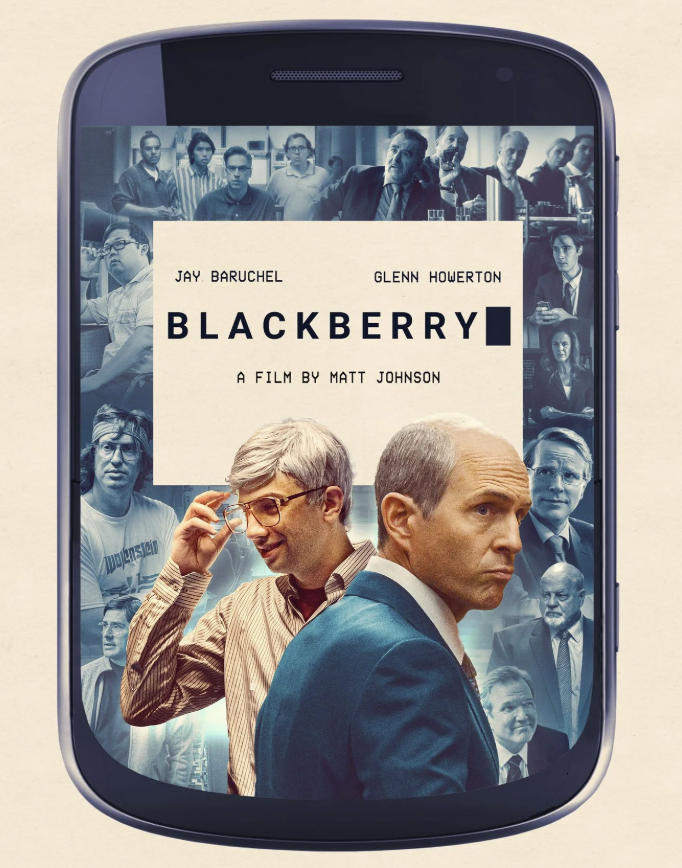
I watched BlackBerry last night. It might be the most painful product case study ever filmed.
I come at this story from a somewhat unique perspective.
- I've produced two Netflix Original feature films as a Netflix content partner, so I understand how stories are structured.
- I lived in Waterloo, a mile from the University of Waterloo, where RIM was born. The movie was being filmed in my neighborhood.
- And I'm a Product Manager.
BlackBerry's downfall is one of the clearest examples of a company optimizing for the world that existed, while the market was quietly shifting underneath it.
What the film gets exactly right
BlackBerry didn't die because the iPhone had better specs. It lost because it optimized for the enterprise communication device, while the smartphone was becoming a general-purpose computing platform.
They built for carriers. For enterprise IT. For security compliance.
They did not build for the person holding the phone 100 times a day.
The architecture was optimized for keyboards and messaging. The app ecosystem never became central to the strategy. The OS struggled to adapt to touch.
Then Apple asked a completely different question.
Not "how do we satisfy carrier requirements?" But "what should this feel like in someone's hand?"
BlackBerry optimized for reliability. Apple optimized for experience and platform. Once the platform shift started, the gap compounded.
The structural problem
The film shows two co-CEOs. One obsessed with engineering perfection, the other with deal-making. Neither one obsessed with redefining the product for the next wave of users. But there's something structural underneath that: when no single person owns the product direction, no one can make the hard call to cannibalize your core before the market does it for you.
That's the real lesson.
Products don't die when competitors get better. They die when the market shifts and the product stays optimized for the old world.